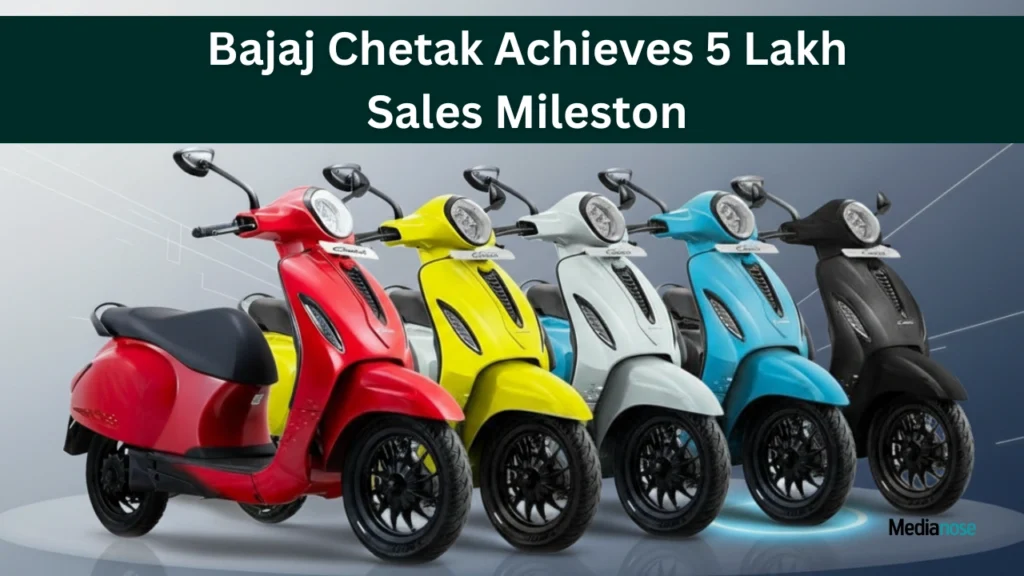
Bajaj Chetak: The Bajaj Chetak electric scooter has achieved a major milestone, crossing over 510,000 units in cumulative sales since its comeback in January 2020. While the initial years were marked by slow adoption, sales have surged dramatically in the past year, highlighting the growing dominance of traditional manufacturers in India’s electric two-wheeler industry. This achievement not only reflects consumer confidence but also signals a broader shift in the country’s mobility landscape.
Rapid Growth and Market Expansion
Bajaj Chetak’s sales journey is nothing short of remarkable. After taking nearly four years to touch its first 100,000 units, the scooter quickly scaled new heights in the following months. By September 2024, 206,366 units were sold in just 10 months, accounting for 40 percent of the total volumes. Since April 2024 alone, Bajaj has dispatched more than 348,000 scooters, and the last 200,000 were achieved in under 10 months.
Key highlights of Chetak’s growth include:
- First 100,000 units took nearly 46 months to sell.
- Last 200,000 units sold in under 10 months.
- Monthly sales consistently above 20,000 units.
- Rapid adoption in both metro and tier-two cities.
This trajectory shows how the EV market has moved from cautious adoption to mainstream acceptance. Where Bajaj once sold just a few thousand units monthly, the Chetak now consistently records strong sales.
Also Read

Bajaj Chetak Variants, Pricing, and Customer Reach
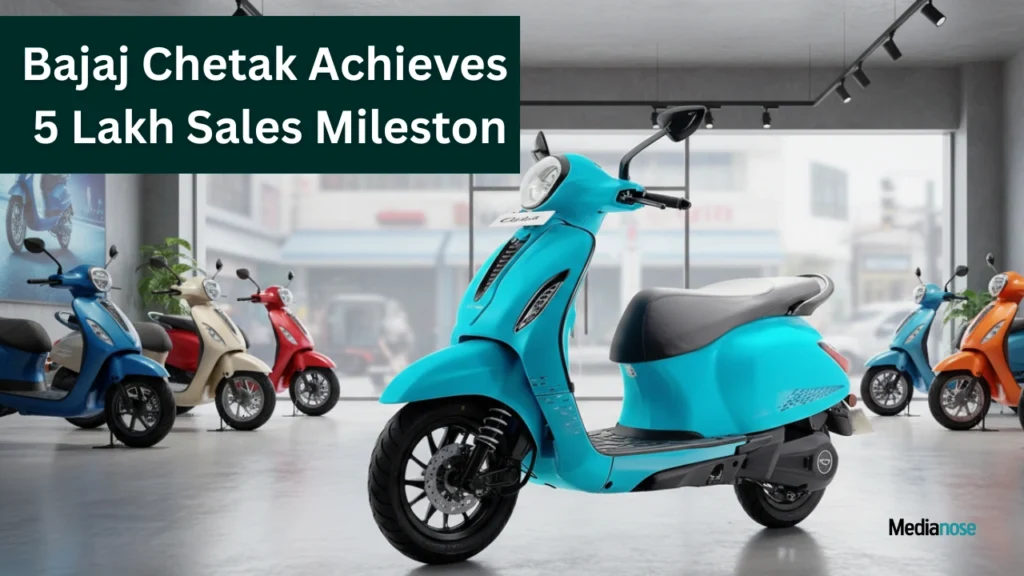
The Bajaj Chetak electric scooter comes in four distinct variants, catering to both entry-level and mid-range buyers. The 3001 variant is powered by a 3 kWh battery, while the 3501, 3502, and 3503 offer larger 3.5 kWh battery packs. With prices ranging between ₹99,900 and ₹1.35 lakh (ex-showroom), Bajaj has strategically placed the scooter across different budget brackets, attracting a wider customer base.
Reasons why the Chetak appeals to buyers:
- Wide range of battery options (3 kWh and 3.5 kWh).
- Competitive pricing across entry-level and mid-range segments.
- Extensive service network with 3,800+ outlets nationwide.
- Easy availability in tier-two and tier-three cities.
One of Bajaj’s biggest strengths lies in its extensive service network. For customers in smaller cities, the availability of service centers often influences their purchase decisions. Bajaj’s vast network has played a pivotal role in building trust and accelerating adoption.
Competitive Landscape in the EV Market
The electric scooter segment in India has seen aggressive competition in recent years. Ola Electric continues to dominate the charts in terms of monthly sales, but Bajaj and TVS have rapidly closed the gap. With over half a million units sold, Bajaj now holds a strong position among the top three EV manufacturers.
- TVS iQube has crossed 400,000 units.
- Ather Energy remains strong in premium segment but is behind in volumes.
- Bajaj and TVS leverage manufacturing scale and dealer networks to challenge start-ups.
Bajaj Chetak Electric Scooter and Shifting Dynamics
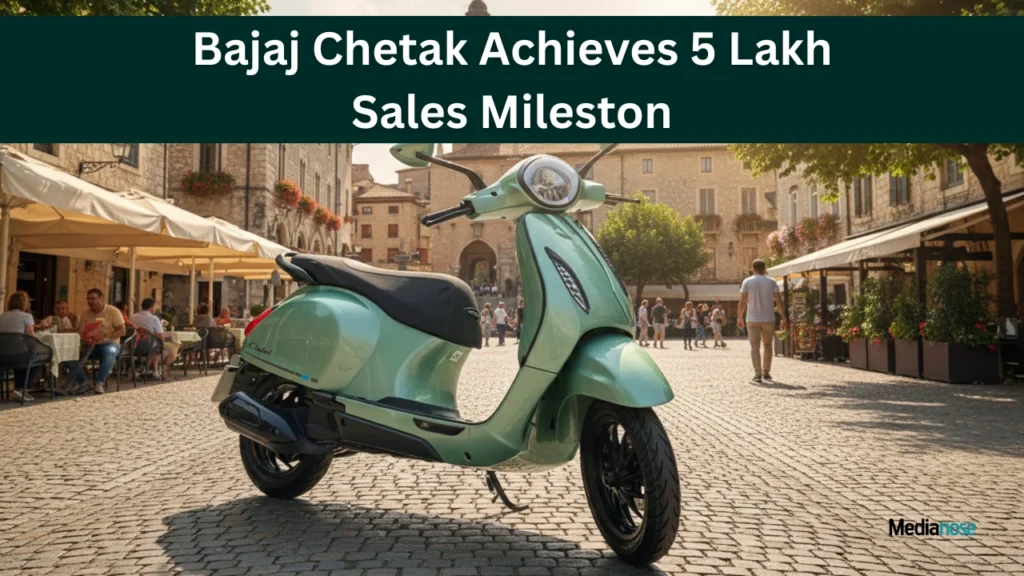
The rise of Bajaj Chetak marks a significant transition in the EV industry. Once dominated by start-ups, the market is now being reshaped by legacy internal combustion engine (ICE) players. Factors such as government subsidies, rising fuel costs, and customer trust in established brands have tilted the scales in favor of companies like Bajaj.
- Legacy manufacturers converting ICE buyers to EVs effectively.
- Rapid second-phase sales indicate mainstream adoption.
- Customers value reliability and brand familiarity alongside innovation.
TVS, Bajaj, and the New Market Balance
The surge in Bajaj Chetak sales, along with TVS iQube’s success, highlights how the market balance is shifting. Start-ups such as Ola still hold leadership positions, but their dominance is under pressure.
- Bajaj achieved the second 100,000 sales in less than a year.
- Start-up dominance is challenged by ICE-era companies’ scale and network.
- Competition now benefits consumers with better choices and service reach.
The Future of EV Adoption in India
India’s EV journey is moving toward mass adoption, and Bajaj Chetak’s trajectory is evidence of this transformation. The company has managed to attract customers not only in metropolitan regions but also in smaller cities, thanks to its extensive sales and service reach.
- Growing acceptance of EVs beyond metro areas.
- Government incentives and rising fuel prices support EV adoption.
- Legacy manufacturers using their scale to accelerate market penetration.
Final Verdict
The Bajaj Chetak’s milestone of crossing 510,000 units is more than just a sales figure—it is a symbol of how India’s EV market is evolving. From slow beginnings to exponential growth, the scooter’s journey highlights the power of legacy manufacturers when they fully commit to electrification. With its wide service reach, competitive pricing, and growing consumer trust, Bajaj has firmly established itself as a front-runner in the EV space. As competition intensifies, the real winners will be consumers, who now have access to reliable, affordable, and future-ready mobility solutions.