
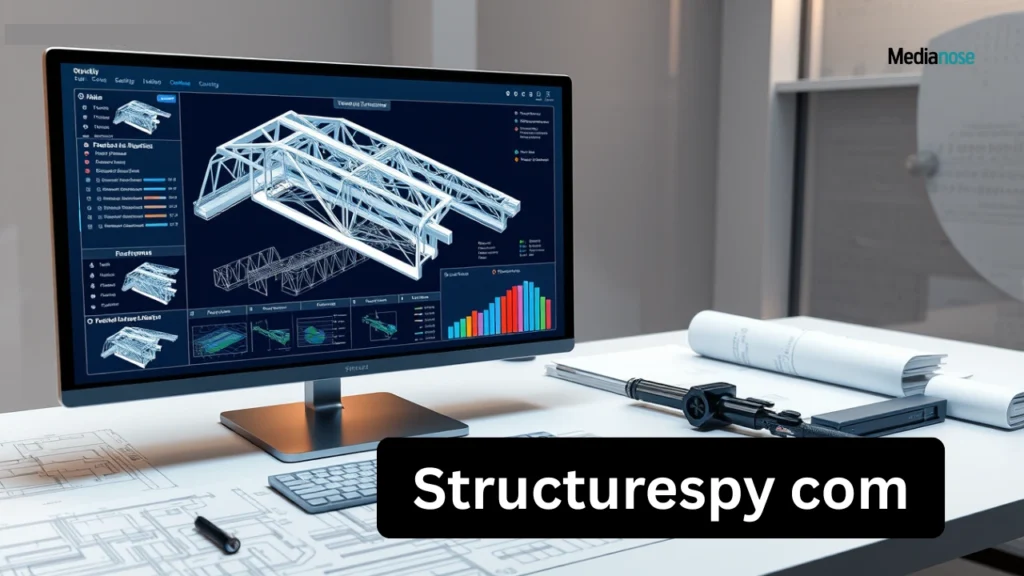
Understanding how structures behave under various forces is one of the most important aspects of engineering and architecture. That’s where structurespy com comes into play — a modern, web-based platform that simplifies structural analysis and design. Whether you’re an engineering student exploring mechanics or a professional handling large-scale construction projects, structurespy com provides powerful, intuitive tools that make structural modeling more efficient and accurate. This article will explore its features, benefits, and how it’s changing the way engineers approach design and simulation.
What Is Structurespy com and Why It Matters
Structurespy com is an online structural analysis platform that helps users visualize, calculate, and test how different materials and structures perform under stress. Unlike traditional desktop software that requires complex installations, structurespy com works directly through your browser. This means engineers, architects, and students can access their projects anywhere, anytime.
The platform allows users to simulate beams, trusses, and frames to study forces, bending moments, and deflections. By simplifying the process, it enables both learners and professionals to focus on the results rather than the setup. Whether you’re testing small-scale models or complex designs, structurespy com delivers fast, accurate, and interactive visualizations that save time and effort.
Many engineering institutions now encourage the use of browser-based tools for teaching and demonstration. Platforms like structurespy com bridge the gap between classroom theory and real-world engineering practice, providing practical exposure that traditional lectures can’t always offer.
Also Read


Core Benefits of Structurespy com
- No installation required: Works directly on any device with an internet connection.
- User-friendly interface: Simple drag-and-drop tools for building and testing models.
- Real-time simulation: Instant results that show how structures respond to different loads.
- Cloud storage: Projects can be saved and accessed from anywhere.
- Collaboration: Multiple users can work together, making it perfect for classrooms and teams.
Key Features That Make Structurespy com Stand Out

One of the strongest aspects of structurespy com is its collection of advanced yet user-friendly features. It combines precision with simplicity, allowing users to analyze structures without getting lost in technical complexity. Each feature serves a specific purpose in making the design and analysis process smoother.
1. Interactive 3D Modeling
Users can create detailed 3D structures that simulate real-world conditions. The interface supports beam, truss, and frame models that can be customized with specific dimensions and materials. Once the model is set up, it can be rotated and zoomed to view results from multiple perspectives.
2. Material Database and Load Analysis
The built-in material library allows users to select from common construction materials like steel, concrete, and timber. Each material has predefined mechanical properties that affect how the structure behaves under load. You can apply point loads, distributed loads, or even dynamic forces to simulate realistic scenarios.
3. Real-Time Results and Graphs
Once a model is analyzed, structurespy com instantly displays results in graphical form — including shear force diagrams, bending moment curves, and deflection shapes. These visual results make it easier to interpret the data and identify weak points in a design.
4. Cloud-Based Storage and Collaboration
All projects are stored securely in the cloud. This makes it possible to start a project on one device and finish it on another. Teams can also collaborate on shared models, making it easier to discuss changes and review progress collectively.
5. Integration With Learning and Design Environments
Educational institutions appreciate how structurespy com can be integrated into classroom teaching. Instructors can use it to demonstrate concepts such as stress distribution or moment of inertia. Students can perform their own simulations and gain hands-on understanding of how loads affect structures.
How to Get Started With Structurespy com
Getting started with structurespy com is incredibly simple. The platform is designed for quick setup and easy usability, even for beginners. Here’s how you can start:
- Visit the website: Open your browser and go to structurespy com.
- Create an account: Register using your email or Google account.
- Start a new project: Choose from templates like beam, truss, or frame analysis.
- Input your data: Define nodes, supports, loads, and material properties.
- Run the analysis: Click the “Analyze” button to see real-time results.
- Review and export: Examine graphs, diagrams, and stress reports. You can export the data as PDFs for documentation.
This process usually takes less than ten minutes, even for complex designs. Beginners can use the tutorial library available on the platform to learn how to perform different types of simulations.
Practical Applications of Structurespy com

The versatility of structurespy com makes it suitable for a wide range of industries and educational purposes. It’s not just a tool for learning; it’s also powerful enough for professional engineering projects.
For Students and Educators
- Demonstrate real-world structural behaviors in classrooms.
- Run experiments and visualize results without needing expensive software.
- Assign projects that require students to apply analytical thinking.
For Engineers and Designers
- Analyze new designs and materials efficiently.
- Test different load combinations to ensure safety and compliance.
- Create reports for clients and stakeholders quickly.
For Construction Teams
- Collaborate with architects and engineers remotely.
- Use real-time analysis to make on-site adjustments.
- Compare various designs before final implementation.
Structurespy com vs Traditional Software
| Feature | Structurespy com | Traditional Software |
|---|---|---|
| Installation Required | No | Yes |
| Accessibility | Cloud-based, any device | Desktop only |
| Collaboration | Real-time online | Limited |
| Learning Curve | Easy | Complex |
| Price | Affordable/Free plan | Expensive licenses |
| Graphical Visualization | Real-time | Manual rendering required |
This comparison highlights why engineers and educators are increasingly shifting toward web-based platforms like structurespy com.
Why Cloud Tools Are the Future of Engineering Design
Engineering design is moving toward digital transformation. Cloud-based platforms like structurespy com provide flexibility and accessibility that traditional tools lack. Users no longer need to worry about software updates or hardware limitations — all computation happens online.
According to recent educational surveys, over 60% of engineering institutions now integrate browser-based analysis platforms into their coursework. This trend is expected to grow further as industries adopt remote collaboration and sustainable digital ecosystems.
Tips to Get the Most Out of Structurespy com
To maximize your efficiency and accuracy while using structurespy com, consider the following:
- Always double-check input values like load intensity and boundary conditions.
- Save multiple versions of your project for reference.
- Use material presets to ensure consistency in results.
- Export reports regularly for documentation and record keeping.
- Explore community tutorials to learn shortcuts and advanced tricks.
These simple steps can help both beginners and experienced users produce better analysis results faster.
Future Developments and Expectations
The developers behind structurespy com are continuously improving its capabilities. Future updates are expected to include more advanced simulation options, such as non-linear material analysis, seismic modeling, and AI-assisted design recommendations. These improvements aim to make structural engineering more precise, automated, and accessible to everyone.
The platform’s commitment to innovation positions it as one of the most promising digital tools for the future of design and construction.
Frequently Asked Questions (FAQs)
1. Is structurespy com free to use?
Yes, the platform offers a free version with basic features. For advanced simulations, premium plans are available at affordable rates.
2. Can I use structurespy com on mobile devices?
Absolutely. The platform is cloud-based, so it works seamlessly on tablets, laptops, and smartphones with an active internet connection.
3. Is structurespy com suitable for beginners?
Yes, it’s designed for ease of use. Beginners can start with the guided tutorials to learn the basics of structural analysis and gradually move to advanced simulations.
4. How accurate are the results from structurespy com?
The platform uses industry-standard formulas and modeling techniques, making its results highly reliable for educational and professional use.
Conclusion
Structurespy com is more than just an engineering tool — it’s a bridge between learning and practical application. With its accessible interface, real-time analysis, and powerful visualization capabilities, it empowers users to design and test structures confidently. Whether you’re an educator, student, or engineer, it provides the right balance of simplicity, accuracy, and innovation to meet your structural analysis needs.