Royal Enfield has taken a bold leap toward high-performance motorcycling with the unveiling of the Royal Enfield Continental GT 750 at Motoverse 2025. After its first appearance at EICMA 2025, the race-spec machine has now been showcased in India, sparking conversations across the biking community. With early reports hinting that it could replace the outgoing GT 650 in competitive formats, the GT 750 signals the brand’s commitment to building faster, sharper, and more dynamic motorcycles.
Design Highlights of the Royal Enfield Continental GT 750
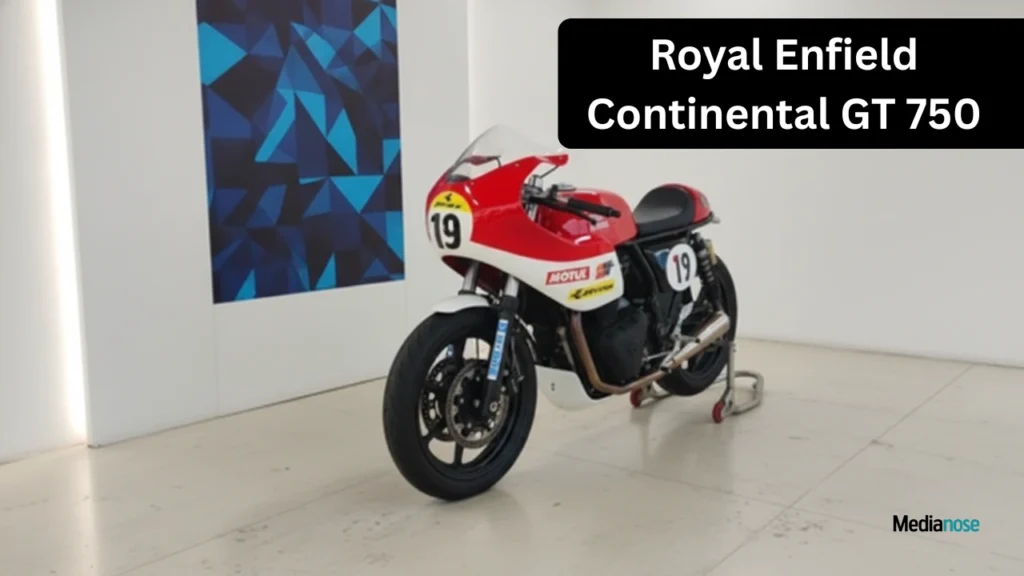
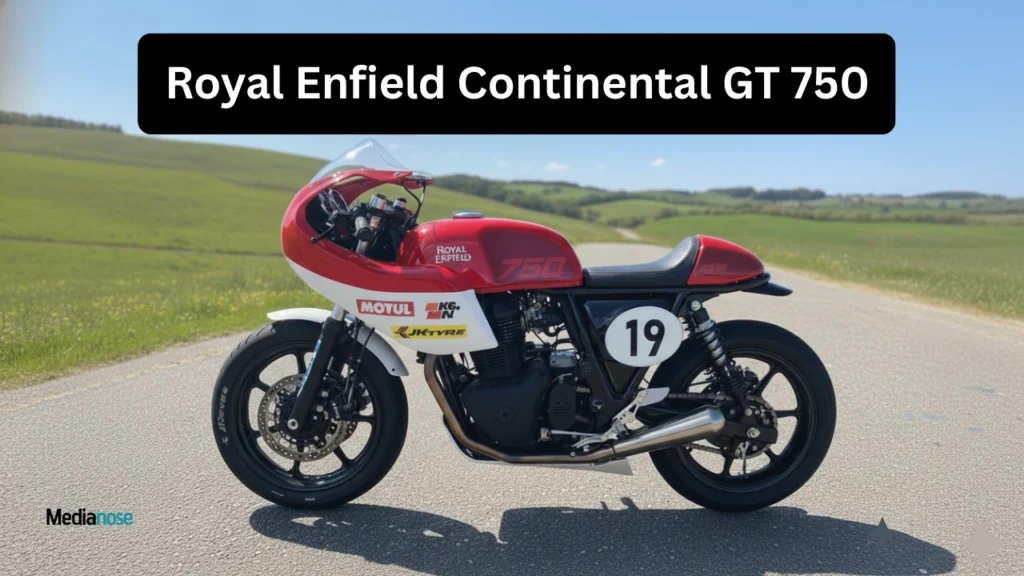
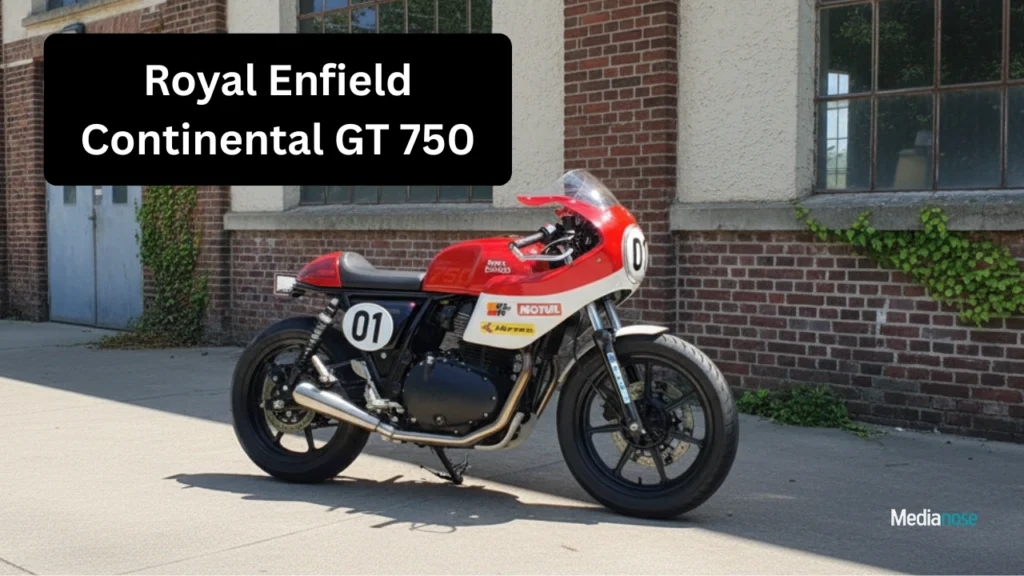
The Royal Enfield Continental GT 750 embraces a retro-racer identity inspired by the GT Cup race motorcycles. Although developed strictly for the track, its design philosophy hints at what future production models might adopt.
Key Design Elements
- Compact bikini fairing that enhances aerodynamics
- Low-slung clip-on handlebars for an aggressive racing stance
- Rear-set foot pegs ensuring optimal lean angles
- Shortened sub-frame for improved agility and cornering precision
- Twin-bar LED tail lamp with a vintage racing flair
- Side-mounted race number plates that complete the competition-ready look
Royal Enfield’s designers have crafted the GT 750 prototype to visually stand apart from the 650 platform, while still carrying the brand’s signature café-racer DNA.
Chassis and Suspension Setup
One of the biggest upgrades in the Royal Enfield Continental GT 750 lies in its new chassis architecture. The revamped frame, coupled with upgraded steering geometry, is engineered to offer stability and razor-sharp responsiveness at high speeds.
Also Read

Track-Ready Hardware
- Newly engineered steel frame designed for rigidity
- Revised steering setup for accurate turn-in
- Showa-tuned suspension components optimised for racetrack conditions
- Telescopic forks at the front for consistent damping
- Twin shock absorbers at the rear built to handle aggressive riding
- Lightweight components to reduce overall mass
These enhancements demonstrate Royal Enfield’s growing interest in performance-oriented engineering, an area that the brand has only recently begun to explore seriously.
Braking and Handling Performance
The braking system on the Royal Enfield Continental GT 750 is significantly improved over the GT 650. Track racing demands sharp stopping power, and Royal Enfield has ensured that the bike is equipped to match its increased performance.
Braking Improvements
- Twin front disc brakes offering superior bite
- High-performance callipers for heat-resistant braking
- Refined lever feel for confident modulation
- Rear disc setup tuned for stability during corner entry
The combination of twin discs and upgraded callipers helps the motorcycle remain composed even during hard braking situations, making it suitable for competitive use.
Engine Performance
The heart of the Royal Enfield Continental GT 750 is an all-new 750 cc parallel-twin engine developed specifically for higher performance. This marks a major step forward from the brand’s long-running 648 cc platform.
Expected Engine Specifications
- 750 cc parallel-twin, liquid-cooled configuration
- Estimated 54–55 bhp power output
- Approx. 65 Nm peak torque
- Smoother and broader power delivery
- Six-speed gearbox carried over from the 650 lineup
- Slipper clutch for easier downshifts at high speeds
While the numbers are not final, the increase in displacement and torque clearly signals Royal Enfield’s direction toward more powerful neo-retro motorcycles.
Future Road Model
Although the showcased version is a full race-spec prototype, Royal Enfield is expected to bring a road-legal version of the Royal Enfield Continental GT 750 to the market. Early estimates point to a launch window between late 2026 and early 2027.
What to Expect from the Road Variant
- Road-friendly ergonomics while retaining café-racer silhouette
- Possibly modern electronics like riding modes or traction aid
- Lower compression tuning for everyday rideability
- Single or dual-exit exhaust system
- Expected price: around ₹4 lakh ex-showroom
If these insights prove correct, the GT 750 could become a flagship model within Royal Enfield’s retro performance lineup.
Why the Royal Enfield Continental GT 750 Matters
The introduction of the Royal Enfield Continental GT 750 is more than a simple engine upgrade. It signals a transformation in Royal Enfield’s brand identity. For decades, RE was known for relaxed cruisers and simple, charming retro bikes. With the GT 750, the company is stepping into a territory dominated by performance-oriented machines.
Key Reasons the GT 750 Stands Out
- Represents Royal Enfield’s most powerful twin-cylinder engine yet
- Introduces a sportier design philosophy
- Geared toward racing and competitive performance
- Bridges the gap between classic styling and modern dynamics
- Opens doors for future 750 cc models in multiple categories
This shift could inspire a complete 750 cc family—ranging from a café racer to a roadster and even a modern cruiser.
Final Verdict
The Royal Enfield Continental GT 750 marks a significant turning point for the company, showcasing its ambition to compete in the high-performance segment. With a new chassis, upgraded braking hardware, and a more powerful twin-cylinder engine, the GT 750 promises to deliver an exhilarating track experience. While the race-spec version steals the spotlight now, its eventual road-going model could redefine the premium retro space in India. Royal Enfield’s growing commitment to performance engineering suggests that the GT 750 is not just another motorcycle—it’s the beginning of a powerful new era.