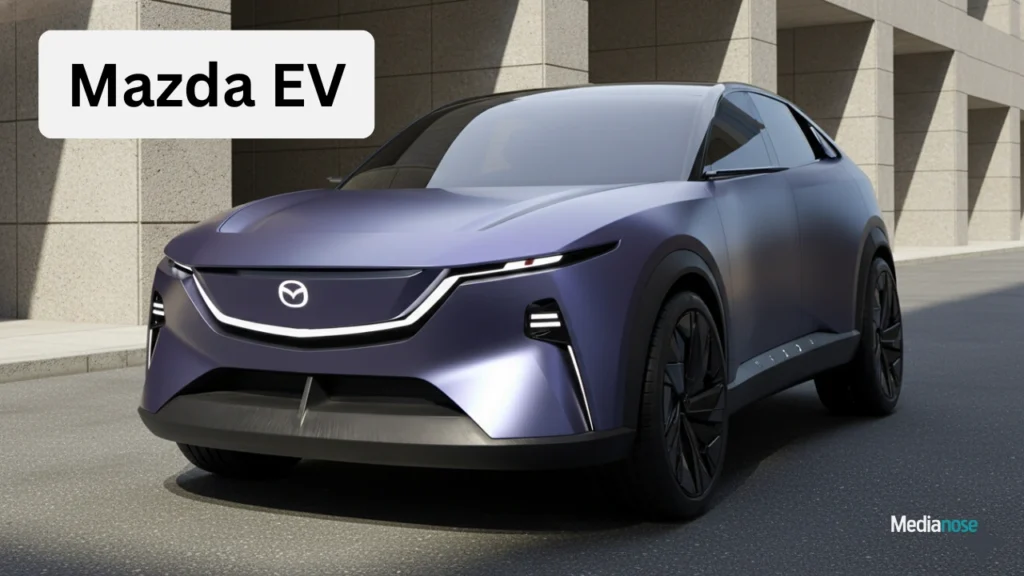
Mazda EV: A surprising test mule spotted in California has sparked new conversations about whether Mazda is finally taking the electric revolution seriously. The prototype, reported by industry sources, suggests that the company is quietly preparing its first Mazda electric vehicle designed specifically for the U.S. market. After years of hesitation and a limited EV presence, Mazda appears to be building momentum for a new chapter—one that could shape its future in America.
Strange New Prototype Hints at Next Mazda EV
Witnesses first noticed the mysterious mule on highways near Mazda’s R&D center in Irvine, California. At a glance, the prototype looked like a modified CX-90 mixed with a shorter CX-60 rear section. The proportions were clearly off, and the wheels sat unusually far inward, signaling that this was an early-stage engineering mule rather than a near-production model.
A few key observations stood out:
- The vehicle sported a fully closed front fascia, indicating an all-electric powertrain.
- The grille mimicked the CX-90’s shape but was entirely blocked.
- A slim air passage below the bumper allowed minimal airflow, typical of EV cooling layouts.
- The mule carried mismatched body panels, consistent with test vehicles hiding new underpinnings.
Early mules rarely resemble the final product, so the odd design likely masks an upcoming Mazda electric vehicle currently in development.
Also Read
New Skyactiv Platform Could Power Mazda EV Models
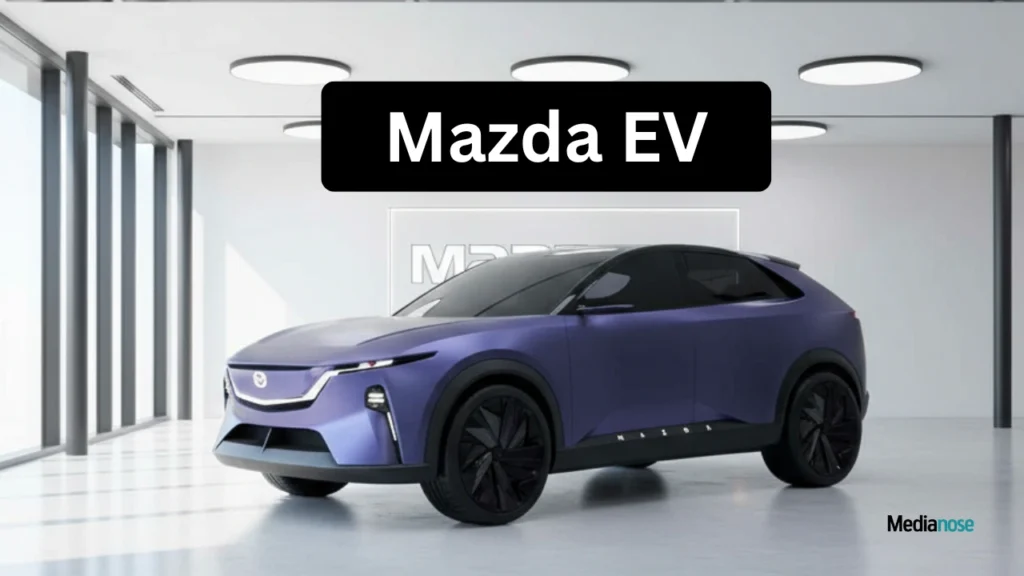
Mazda’s next generation of EVs will reportedly ride on the Skyactiv EV Scalable Architecture, a platform engineered for flexibility. While Mazda has kept many details under wraps, this platform is expected to support multiple body types—ranging from crossovers to lower-profile vehicles.
What the platform promises:
- Scalability: Can underpin vehicles of various lengths and heights.
- Affordability goals: Mazda hinted that keeping costs accessible was a major priority.
- Voltage uncertainty: The company has yet to confirm whether the architecture will run on 400-volt or 800-volt systems.
- Future readiness: Designed to offer long driving ranges and improved convenience features.
The prototype seen in California may be the first real-world example of this architecture being tested in the U.S.
Mazda Electric Vehicle Strategy for the U.S. Market
Mazda has been relatively slow to electrify compared to competitors. The MX-30, its first EV sold in the U.S., struggled with a limited range and low demand, leading to its discontinuation after just two years. Since then, Mazda has been left with no electric offerings in America—an unusual gap in today’s market.
The new mule suggests a shift in priorities. Sources believe:
- The spotted prototype may be Mazda’s first dedicated EV designed specifically for U.S. customers.
- Mazda is preparing for a major EV rollout by the late 2020s.
- A brand-new production facility in Japan will manufacture future electric SUVs and crossovers starting around 2027.
Given its timing and location, the prototype test car could be an early testbed for the U.S.-focused Mazda electric vehicle expected later this decade.
Global Efforts Show What Future Mazda Electric Vehicle Designs May Look Like
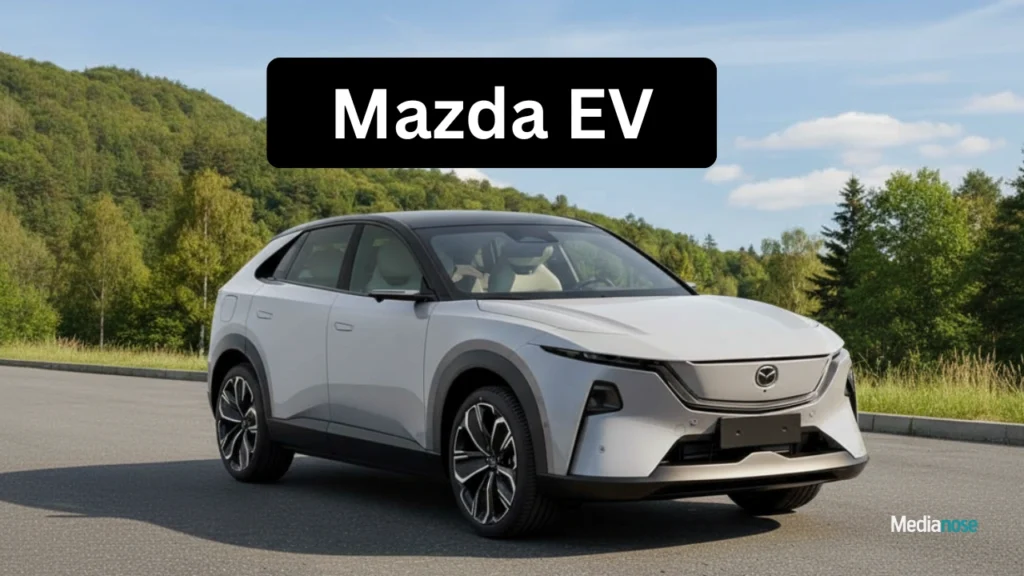
Mazda has already dipped its toes into EV development through global partnerships. A collaboration with China’s Changan led to the creation of the Mazda 6e, also known as the EZ-6, and it represents a huge leap compared to Mazda’s earlier EVs.
Why these global models matter:
- The 6e offers strong performance and a refined electric driving experience.
- Mazda is also preparing the EZ-60 crossover for global markets, including Europe.
- These vehicles showcase modern styling, improved EV engineering, and strong range potential.
While Mazda hasn’t confirmed whether the U.S. will receive similar models, these vehicles highlight the direction the company may take with the upcoming Mazda electric vehicle lineup.
Why Mazda Needs a Strong EV Presence in the U.S.
The American EV market continues to grow rapidly, and staying competitive requires more than plug-in hybrids or mild electrification. Mazda’s lack of EVs stands out, especially as rivals expand aggressively.
A dedicated U.S. EV matters because:
- American buyers heavily invest in SUVs and crossovers—Mazda’s strong suit.
- Competitors like Hyundai, Kia, Toyota, and Ford have broadened their EV portfolios.
- New EV incentives and infrastructure improvements encourage adoption.
- Mazda aims for EVs to account for around 25% of global sales by 2030.
To meet these goals, Mazda must prioritize a capable, U.S.-tailored Mazda electric vehicle that blends performance, design, and practicality.
What the Future May Look Like for Mazda Electric Vehicle Models
While Mazda remains quiet about exact specifications or launch details, the company has shared a few hints about its new EV roadmap. Future models are expected to offer:
- Advanced styling consistent with Mazda’s premium approach.
- Enhanced convenience features for everyday usability.
- Long-range capabilities competitive with leading EV brands.
- Platform versatility leading to multiple body styles in the coming years.
If the recent test mule is any indication, Mazda could soon unveil a fully new electric SUV engineered to meet American expectations for size, performance, and technology.
Final Verdict
Mazda’s unconventional new prototype may look rough today, but it represents the brand’s most promising step toward meaningful EV adoption in the U.S. After years of hesitation, Mazda appears ready to build a dedicated Mazda electric vehicle that fits American preferences and competes with established electric SUVs. With a new EV platform, a growing global portfolio, and a commitment to electrifying 25% of its sales by 2030, Mazda is finally positioning itself for the electric era. If the company executes its strategy well, its upcoming EVs could become some of the most appealing alternatives in a rapidly expanding market.