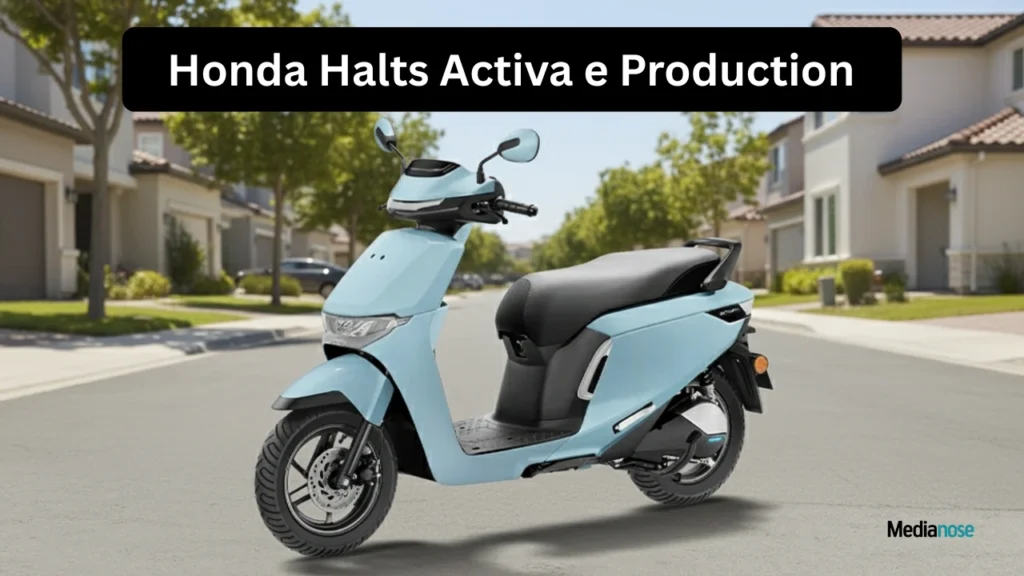
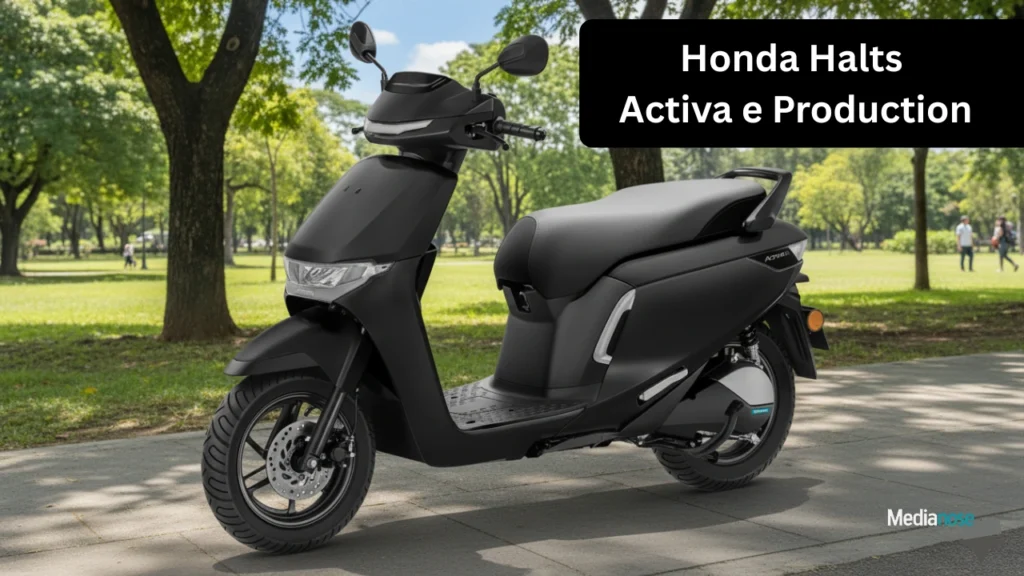
Honda’s electric ambitions have hit a roadblock as production of the Activa e and QC1 has remained at zero since August 2025. This sudden pause comes only months after Honda entered the Indian EV market in January 2025. While the company manufactured 11,168 units between February and July, only 5,201 scooters were dispatched, leaving a massive unsold inventory. With thousands of units still sitting in stockyards, continuing production would only worsen dealer pressure and lead to inevitable discounting.
The bottleneck highlights a significant mismatch between Honda’s expectations and the EV market’s actual demand patterns. Buyers appear hesitant to adopt Honda’s first electric offerings, citing range, charging flexibility and value concerns.
Sales Gap Widens as QC1 Outperforms Activa e
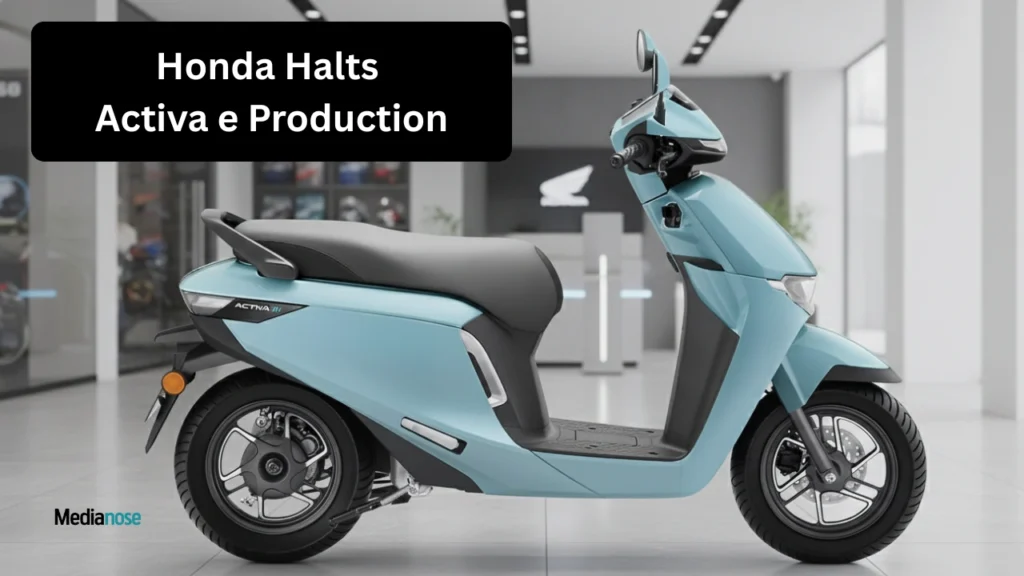
A closer look at the numbers reveals a striking imbalance between the two scooters. From February to June 2025, the QC1 accounted for nearly 86% of total sales with 4,252 units. The Activa e, despite carrying the iconic Activa badge, sold only 698 units in the same period. By July, its cumulative sales had barely touched 740 units.
For a company whose petrol-powered Activa consistently sells over 200,000 units a month, this response underscores a major disconnect. Strong brand recall did not translate into acceptance for Honda’s electric version, indicating that consumers are prioritizing practicality over legacy.
Also Read
Key Reasons for QC1’s Higher Demand
- Lower starting price of ₹94,422 (ex-showroom, Delhi)
- Convenient portable charging via any household socket
- Availability in six major cities
- Greater flexibility for users without reliance on dedicated infrastructure
In contrast, the Activa e is priced at ₹1.17 lakh and depends fully on Honda’s limited swapping network.
Honda Activa e Electric Scooter Battery Swapping
The most critical challenge for the Activa e lies in its battery-swapping model. Swapping can be highly effective only when stations are dense and easily accessible. Honda’s grid currently operates only in Bengaluru, Mumbai and Delhi—far too limited for hassle-free use.
Why the Swapping Model is Struggling
- Users often need to take longer detours to find a station
- Range anxiety increases when riding outside the swapping zone
- Lack of network expansion restricts the operational radius
- Competing models offer simpler home-charging options
Meanwhile, the QC1’s portable charging solution appeals to customers who prefer simplicity. But even that has its limitations. For instance, apartment dwellers without dedicated power sockets in parking lots can find it difficult to charge their scooters daily.
Competition is Pulling Ahead Faster
The electric two-wheeler segment has become fiercely competitive, and rivals have been quicker to adapt. Models like the TVS iQube and Bajaj Chetak offer solid performance, convenient charging, and practical real-world range. The iQube delivers around 82 km on a full charge, while the Chetak matches this with strong build quality and better after-sales support.
Honda’s electric lineup, by comparison, appears more conservative—offering modest range and performance at a higher price, especially in the case of the Activa e.
Rivals Have an Edge Due To:
- Home-charging convenience
- Larger dealer and service networks
- Frequent software and feature updates
- Better range-to-price ratios
Both Ola Electric and Ather Energy have rolled out multiple updates since launch, improving range, battery management and user interface—a pace Honda has struggled to match.
Market Signals Behind the Production Pause
Three consecutive months of zero production—August, September and October—indicate that Honda is prioritizing stock clearance over fresh manufacturing. The dispatch rate of only 46.6% also confirms that more than half the units produced have not even reached showrooms yet.
Honda now faces three possible pathways:
- Offer heavy discounts to push existing inventory
- Rethink or discontinue one of the models
- Launch updated versions that solve the charging and performance issues
Discounting may temporarily move stock but could dilute brand value. Discontinuation would raise questions about Honda’s long-term EV vision. Upgrading the scooters seems the most sustainable strategy, but it requires investment and time.
Honda Activa e: What Needs to Change
To regain momentum, Honda must reassess its approach to battery swapping and overall product performance. The infrastructure-first model can succeed only with an aggressive rollout of swap stations across multiple cities. It also needs to address:
- Improved range for everyday commuting
- Better performance to match rivals
- Wider city-level coverage
- More competitive pricing
- Regular software and feature updates
Honda’s petrol dominance does not automatically translate to electric success. EV buyers evaluate products on range, charging access, technology and running cost—areas where Honda must catch up quickly.
Final Verdict
The production halt of the Activa e and QC1 is not a withdrawal but a strategic pause—giving Honda the breathing space to realign its EV strategy. The Activa e’s battery-swapping concept is promising but requires rapid network expansion to truly work for Indian commuters. The QC1 has shown better acceptance, yet it too needs improvements to remain competitive.
For Honda to succeed in the fast-evolving electric two-wheeler market, stronger performance, wider infrastructure support and a sharper value proposition are essential. The next move will determine whether Honda can regain its footing in the EV race or continue trailing behind faster-moving rivals.