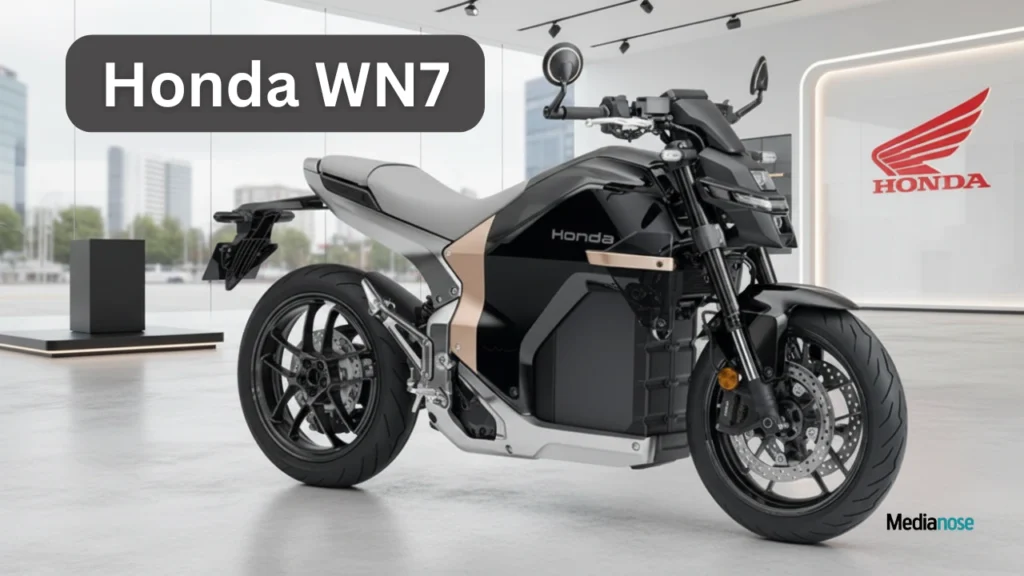
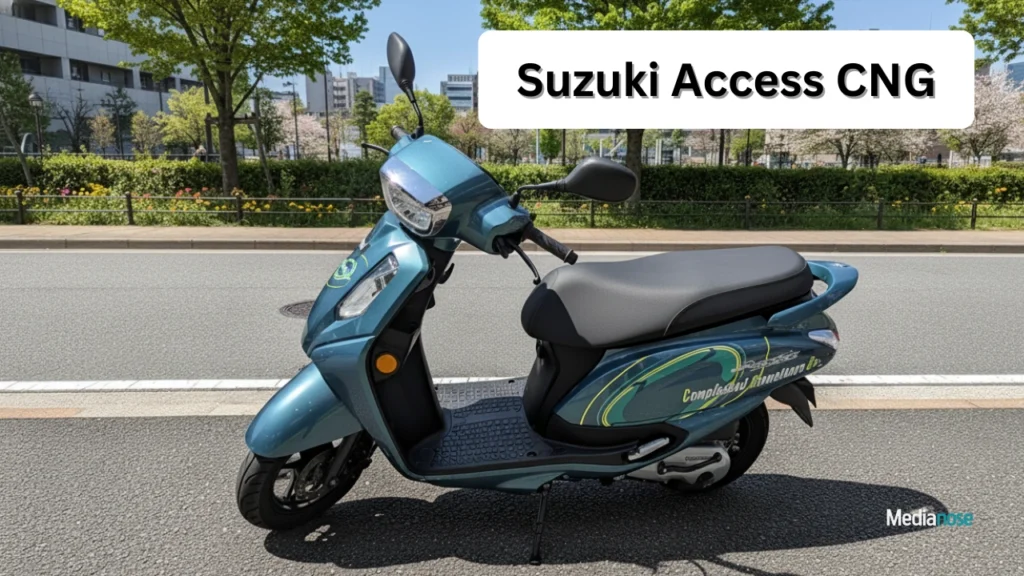
Suzuki Access CNG: Suzuki Motor Corporation made a strong statement at the Japan Mobility Show by unveiling its latest lineup of alternative-fuel technologies. With the spotlight on sustainability, the company presented prototypes of the Suzuki Access CNG/CBG and a hydrogen-powered Burgman scooter. These innovations reflect Suzuki’s firm belief that achieving carbon neutrality will require multiple fuel pathways rather than relying solely on electric vehicles.
Suzuki Access CNG Prototype: A Step Toward Cleaner Urban Mobility
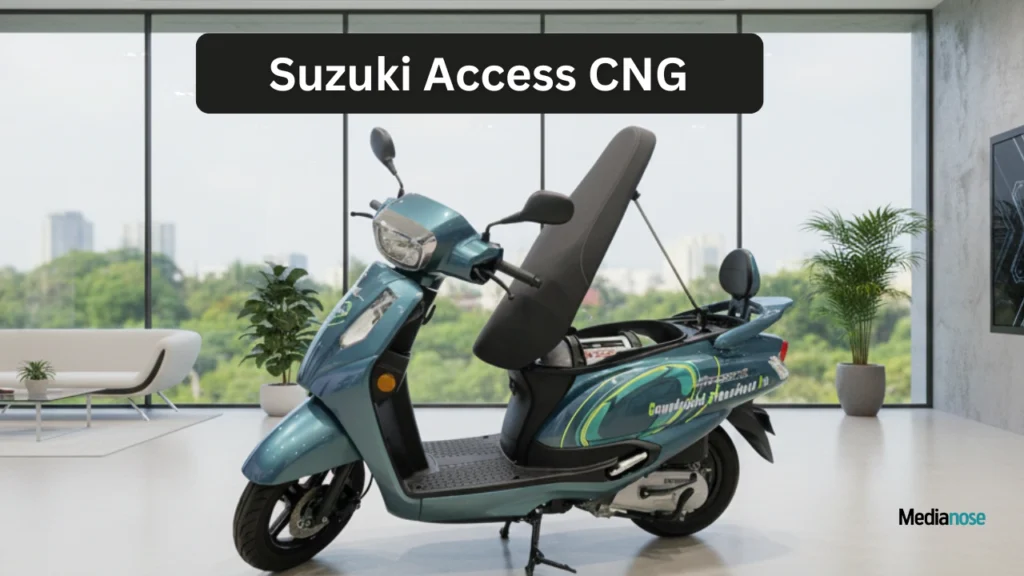
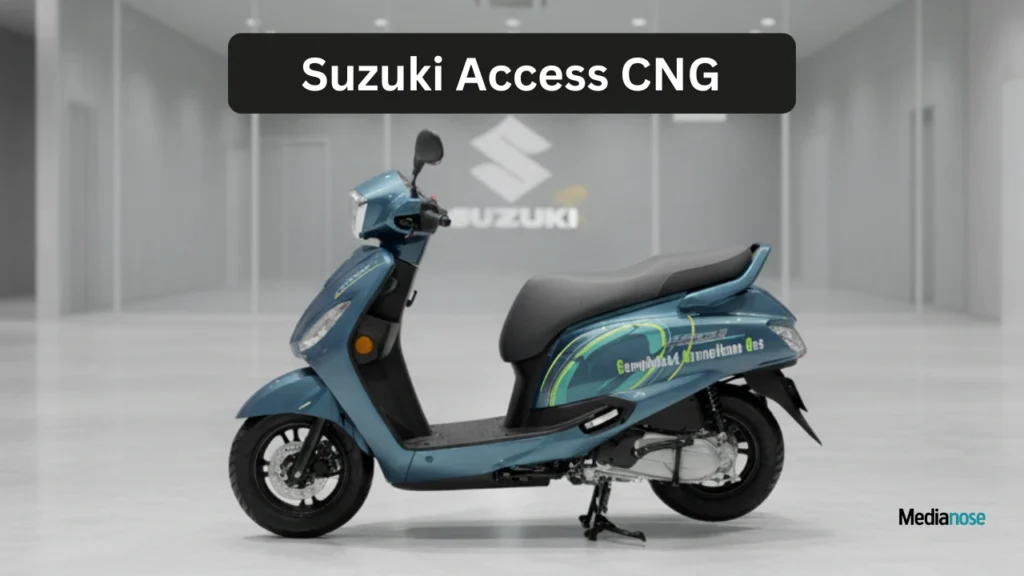
The CNG-powered Suzuki Access prototype is one of the most significant highlights from the show. This research and development version of the popular scooter has been engineered to run on both Compressed Natural Gas (CNG) and Compressed Biomethane Gas (CBG).
While the exterior design closely resembles the existing petrol-powered Access sold in India, Suzuki has introduced key technical innovations beneath the seat. The prototype features:
- A 6-litre CNG tank with a dedicated filling nozzle.
- A 2-litre petrol tank for extended range and flexibility.
- Dual-fuel capability, allowing riders to switch between petrol and gas depending on availability.
Despite the additional equipment, the scooter maintains its practicality. The combined fuel setup offers an estimated range of around 170 km, though the added hardware increases its overall weight by roughly 10%. This trade-off, however, is justified by the scooter’s cleaner emissions and lower running costs.
Also Read
Suzuki’s India-Based Biogas Project: Turning Dairy Waste into Energy
Suzuki’s efforts extend beyond vehicle development to creating sustainable energy ecosystems. At the Japan Mobility Show, the company showcased a scale model of a biogas plant built in collaboration with a dairy cooperative in India.
This innovative project aims to convert dairy waste into Compressed Biomethane Gas (CBG)—a renewable and cleaner energy source. The initiative not only reduces carbon emissions but also provides economic benefits to rural communities.
Key features of the India-based biogas project include:
- Waste-to-energy conversion, transforming dairy by-products into usable biogas.
- Localised energy generation, which helps reduce dependence on imported fossil fuels.
- Dual benefits for farmers, who gain both renewable fuel and nutrient-rich organic fertiliser from the process.
Suzuki believes this approach can serve as a scalable model for developing nations like India, where agricultural and dairy sectors produce vast amounts of organic waste. By transforming waste into clean energy, Suzuki contributes to rural sustainability and energy independence.
Hydrogen-Powered Burgman Concept: Exploring the Future of Fuel
Another major attraction at the show was the hydrogen-powered Burgman 400. This concept scooter represents Suzuki’s progress in hydrogen engine development, a technology that offers the advantages of internal combustion without the carbon emissions associated with petrol or diesel.
The company displayed a cutaway model of the Burgman hydrogen engine, revealing key details of its engineering evolution since its first appearance at the 2023 Japan Mobility Show. Suzuki continues to refine this technology, focusing on:
- Efficient hydrogen combustion systems for better performance and safety.
- Reduced emissions, ensuring minimal environmental impact.
- Compatibility with existing scooter platforms, allowing easier adaptation for future mass production.
Hydrogen fuel technology offers great promise for urban mobility. It enables quick refuelling, produces only water vapour as a byproduct, and eliminates range anxiety—making it a potential game-changer for future scooters and motorcycles.
Suzuki’s Multi-Pathway Approach to Carbon Neutrality
Suzuki’s latest showcase demonstrates its multi-pathway approach to achieving carbon neutrality. Instead of focusing exclusively on electrification, the brand is exploring several complementary technologies, including:
- CNG and CBG fuels, offering cleaner combustion for mass-market vehicles.
- Biogas initiatives, turning waste into renewable energy.
- Hydrogen power, combining traditional performance with zero carbon emissions.
This flexible strategy enables Suzuki to address the diverse needs of global markets. For instance, while electric scooters might thrive in urban centres with strong charging infrastructure, biogas and CNG-powered scooters could serve rural regions where electricity supply remains inconsistent. Similarly, hydrogen power could provide a long-term solution for both performance enthusiasts and eco-conscious riders.
Impact on the Indian Market
India remains a key market for Suzuki’s sustainability roadmap. The Suzuki Access CNG and biogas projects are directly tied to India’s growing demand for affordable and eco-friendly mobility solutions. With rising fuel costs and stricter emission norms, CNG-powered two-wheelers can play a major role in the nation’s shift toward greener transportation.
Moreover, India’s government has been promoting the use of bio-CNG and biogas under various clean energy initiatives. Suzuki’s early involvement in this space could give it a competitive advantage in launching production-ready models tailored for Indian consumers.
Challenges and Future Outlook
While the advancements are promising, Suzuki faces several challenges in commercialising these technologies. The infrastructure for hydrogen refuelling and biogas distribution is still limited, especially in developing countries. Additionally, ensuring the durability and safety of dual-fuel systems requires continued research and testing.
Nonetheless, Suzuki’s proactive stance highlights its commitment to innovation. By developing multiple sustainable technologies simultaneously, the company is preparing for a future where mobility will rely on diverse and adaptable energy sources.
Final Verdict
The showcase of the Suzuki Access CNG/CBG and hydrogen-powered Burgman at the Japan Mobility Show reinforces Suzuki’s vision for a carbon-neutral future built on versatility and innovation. Through its biogas projects, alternative-fuel scooters, and hydrogen research, the company is paving the way for sustainable mobility solutions that cater to different regions and market needs.
Rather than betting on a single technology, Suzuki’s multi-pathway approach ensures resilience and adaptability in a rapidly evolving automotive landscape. With these efforts, Suzuki not only strengthens its environmental credentials but also sets a new benchmark for practical, eco-conscious transportation in the two-wheeler industry.