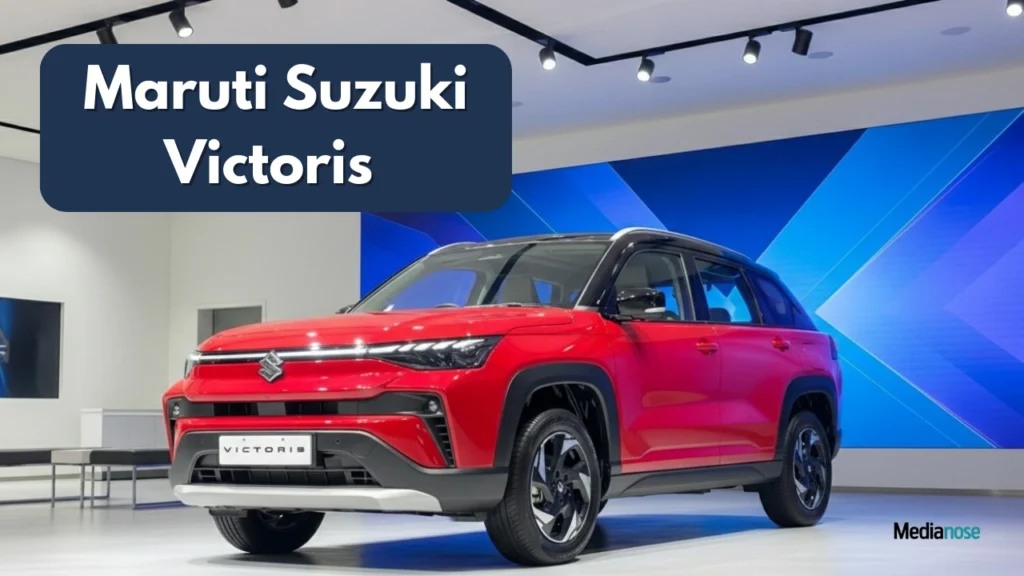
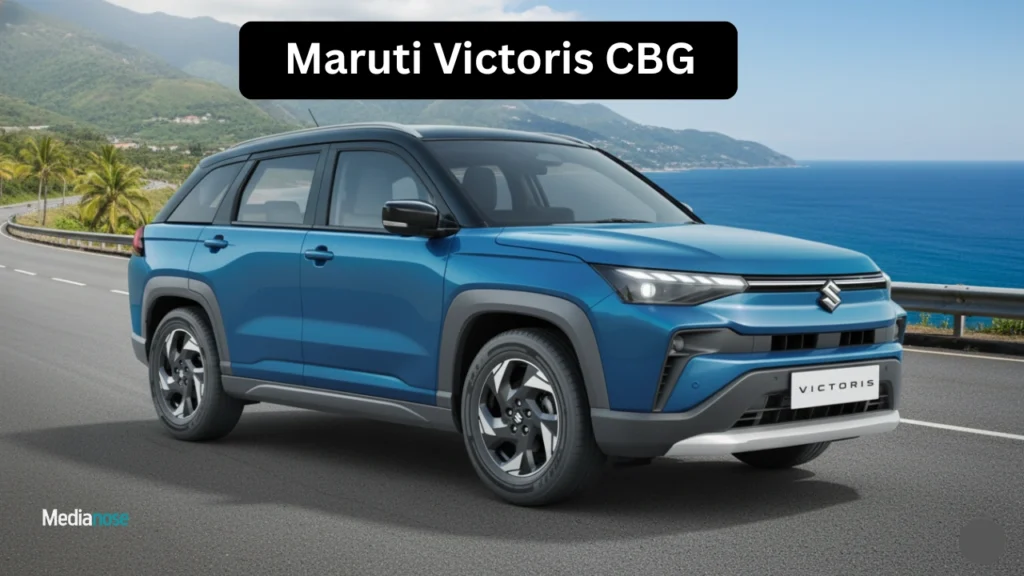
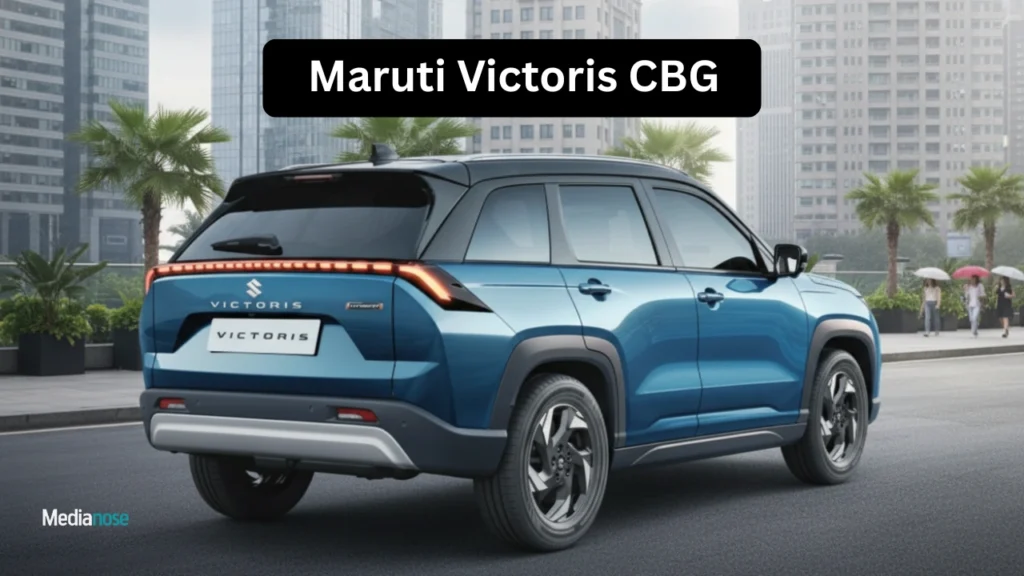
Maruti Victoris CBG: Suzuki is set to reveal the Victoris CBG variant at the Japan Mobility Show 2025, scheduled from October 30 to November 9. This innovative SUV will highlight Suzuki’s commitment to renewable energy, featuring a compressed biogas (CBG) powertrain – a step ahead in eco-friendly mobility. The showcase aims to demonstrate how biogas technology can play a key role in achieving a carbon-neutral automotive future.
Suzuki Victoris CBG Showcased with Sustainable Power
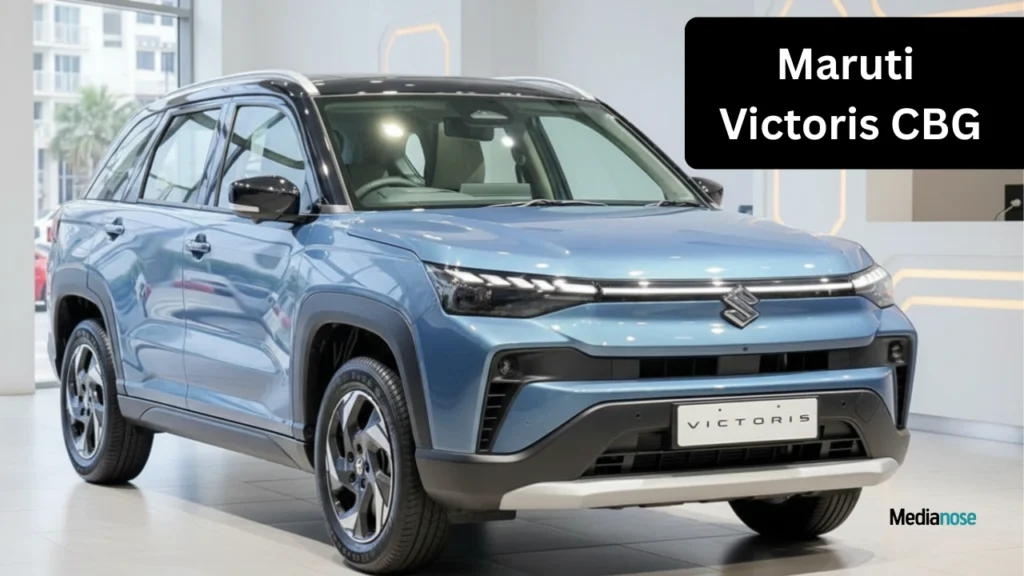
The Suzuki Victoris CBG variant uses an underbody dual-cylinder tank setup, similar to the existing CNG model. This clever engineering ensures that boot space remains unaffected, allowing users to enjoy practicality alongside sustainability.
While Suzuki has not yet confirmed an India launch for the CBG variant, its display at the Japan Mobility Show signifies the company’s push towards renewable fuel solutions. The Victoris lineup currently includes 21 variants, offering multiple powertrain choices.
Understanding the CBG Technology Behind Maruti Victoris
Compressed biogas (CBG) is chemically identical to compressed natural gas (CNG)—both are primarily composed of methane. However, the key difference lies in their source.
Also Read
- CNG is extracted from fossil fuel deposits.
- CBG is generated through the anaerobic digestion of organic waste, such as agricultural residue, cattle dung, and municipal waste.
This process makes CBG a renewable and sustainable fuel, contributing to a closed carbon cycle where emitted carbon is reused within the environment.
Suzuki’s focus on this technology aligns with global efforts to reduce carbon emissions and minimize dependence on non-renewable energy sources.
Suzuki’s Commitment to Renewable Energy
Suzuki Motor Corporation and Maruti Suzuki India have been actively investing in green technologies. In India, the company has already set up a biogas plant at its Manesar facility, operational since 2024.
- Investment: ₹450 crore dedicated to renewable energy projects
- Goal: Support sustainable fuel production and promote eco-friendly mobility solutions
- Showcase Highlight: A miniature biogas plant model representing Suzuki’s ongoing renewable energy initiatives will also be displayed at the Japan Mobility Show
Why the Maruti Victoris CBG Matters for India
India’s abundant agricultural and dairy waste resources make it an ideal environment for CBG production. Despite this potential, no passenger car in India currently uses a CBG-based powertrain.
The Victoris CBG could be a game-changing introduction, helping India reduce dependency on imported fuels while creating value from organic waste. If launched, it may strengthen Suzuki’s position as a pioneer in India’s renewable fuel vehicle market.
Maruti Suzuki Victoris Line-up and Powertrain Options
The Maruti Suzuki Victoris was launched in September 2025, featuring a total of 21 variants across three main powertrain types—petrol mild-hybrid, strong-hybrid, and S-CNG.
1. 1.5-Litre Mild-Hybrid Petrol Engine
- Power: 103hp, 139Nm torque
- Transmission: 5-speed manual / 6-speed automatic
- Mileage: 21.18kpl (manual), 21.06kpl (automatic)
- AWD versions: 19.07kpl efficiency
This engine is ideal for those seeking balanced performance and fuel efficiency in urban and highway driving conditions.
2. Strong-Hybrid Powertrain
The Toyota-sourced 1.5-litre petrol-electric hybrid setup offers exceptional fuel economy.
- Combined Power Output: 116hp, 141Nm
- Transmission: e-CVT automatic
- Claimed Mileage: 28.56kpl
This is the most fuel-efficient variant in the lineup, appealing to buyers looking for low running costs and eco-friendly performance.
3. S-CNG Variants
Suzuki’s proven S-CNG technology is now available with the Victoris lineup.
- Power: 89hp (CNG mode)
- Transmission: 5-speed manual only
- Mileage: 27.02km/kg
This makes the CNG version one of the most economical choices in the segment, offering impressive running cost savings.
Maruti Victoris CBG and Its Market Position
The Suzuki Victoris CBG variant, if introduced, would strengthen the brand’s eco-friendly SUV portfolio in India. Currently, the Victoris range competes with popular midsize SUVs such as:
- Hyundai Creta
- Kia Seltos
- Toyota Urban Cruiser Hyryder
- Honda Elevate
Price Range: ₹10.50 lakh to ₹19.99 lakh (ex-showroom)
CNG variants start at: ₹11.50 lakh
These pricing brackets make the Victoris a competitive and value-driven SUV, especially for buyers who prioritize fuel efficiency and lower emissions.
The Road Ahead for CBG Vehicles in India
India’s transition toward green mobility depends on expanding infrastructure for biogas collection, purification, and distribution. With initiatives like Suzuki’s Manesar biogas facility and government-backed GOBARdhan (Galvanizing Organic Bio-Agro Resources Dhan) scheme, the country is slowly laying the foundation for CBG vehicles.
If Suzuki decides to launch the Victoris CBG in India, it could become the first mass-market passenger vehicle to run on biogas, setting a new sustainability benchmark.
Final Verdict
The Suzuki Victoris CBG stands as a bold statement of Suzuki’s commitment to sustainable mobility and renewable energy innovation. By combining existing CNG engineering with biogas technology, Suzuki is exploring new possibilities for a carbon-neutral future.
For India, where agricultural waste is abundant, this vehicle represents both economic and environmental opportunity. If launched, the Victoris CBG could revolutionize India’s green vehicle landscape, bridging the gap between affordability and sustainability.